How a hotelier's fireside story entered the public record
The legend of Rennes-le-Château did not emerge from medieval manuscripts or ancient crypts. It entered the written record through local newspaper columns, in the mid-1950s, and its earliest appearances can be dated precisely enough to trace a clear line between the man who told the story and the journalists who amplified it.
Fig. 2The hotelier who bought the estate and told customers a treasure story, which the regional press then printed.
Noël Corbu had purchased the estate — the Villa Bethania, the Tour Magdala and the grounds — from Marie Dénarnaud in 1946, taking on her care until her death in 1953. He converted the property into a small hotel and restaurant, and he needed a draw. The story he settled on was a treasure tale centred on Bérenger Saunière, the curé (parish priest) who had built those structures around the turn of the twentieth century and whose unexplained spending had already attracted local curiosity. Corbu refined and embellished the story over several years of telling it to guests across the dinner table.
La Dépêche du Midi and the 1956 articles
The step from oral account to print came in January 1956, when the regional daily La Dépêche du Midi published a series of articles devoted to Saunière and the supposed treasure of Rennes-le-Château. The series ran across several issues and presented the story in the breathless register of popular mystery journalism, describing fabulous wealth discovered during building works and an enigmatic priest who died with a secret. The articles drew directly on Corbu's version of events, and Corbu himself was a clear source: the narrative details match what he was telling hotel guests and would later rehearse in a typescript he prepared for wider circulation.
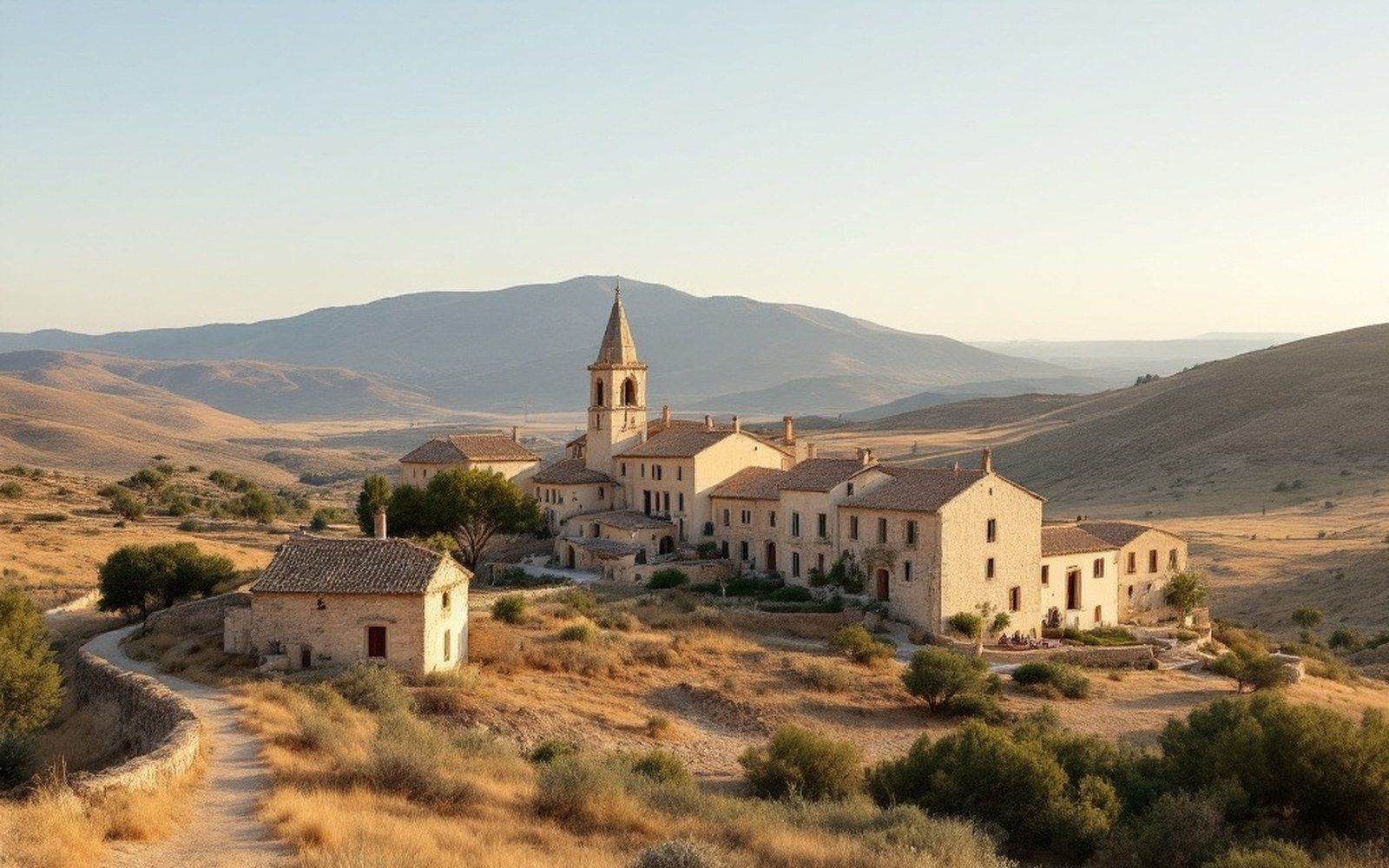
Fig. 3Church, villa and tower stand within a hundred metres of each other on the ridge.
This is the moment the legend became a text. Before January 1956, the story existed only in conversation; after it, there were cuttings that could be kept, copied and cited. That distinction matters enormously for tracing how the myth grew, because later writers who claimed independent discovery were almost always working, at one or two removes, from the same newspaper source — which was itself working from Corbu.
The Archives départementales de l'Aude hold local press material from this period, and the La Dépêche du Midi run can be checked there. The Bibliothèque nationale de France's Gallica platform carries digitised runs of regional French newspapers from the twentieth century, making it possible to verify dates and content directly rather than relying on secondhand summaries.
Fig. 4The man who elaborated the story into a lineage, and whose supporting documents were later shown to be his own composition.
What the articles actually claimed
The 1956 La Dépêche pieces asserted that Saunière had discovered a hidden treasure — or documents pointing to one — during restoration work on the church of Saint Mary Magdalene in the 1890s. They credited him with the sudden and otherwise inexplicable wealth that funded his building programme. The articles did not cite archival evidence for these claims, because none existed. What they relayed was Corbu's oral narrative dressed in the conventions of regional feature journalism.
The Archives départementales de l'Aude hold local press material from this period, and the La Dépêche du Midi run can be checked there.
Subsequent investigators who went to the primary sources — the parish accounts, the diocesan court proceedings, the notarial acts held in civil archives — found a different and more prosaic story: Saunière's income came substantially from the irregular sale of mass stipends, a practice the Diocese of Carcassonne prosecuted him for. Bishop Paul-Félix Beuvain de Beauséjour pressed the case through an ecclesiastical court, and the proceedings survive. There is no documentary trace in any archive of a discovered treasure.
The 1956 articles nonetheless did lasting work. They gave the story a dateable public form. They reached an audience beyond the Sals valley and the tables of Corbu's restaurant. And they provided the raw material that Pierre Plantard and Philippe de Chérisey would later elaborate into a far more intricate construction — one involving forged parchments, invented genealogies and documents deposited at the Bibliothèque nationale de France to give the claims an appearance of provenance. That later structure depended on the 1956 foundation having already established Rennes-le-Château as a place where something mysterious had happened. Corbu gave them the setting; the regional press gave them the printed precedent.