
The man who would not let it drop
Paul-Félix Beuvain de Beauséjour became Bishop of Carcassonne in 1902, by which point Bérenger Saunière had already been living well above any recognisable priestly income for several years. What distinguished de Beauséjour from his predecessor was a willingness to act on what the accounts implied.

Fig. 2What a rural curé of the period actually received, which is the baseline every other figure has to be measured against.
The bishop's concern was specific and canonical. A curé — a parish priest — was permitted to accept mass stipends, small payments from the faithful in return for saying a mass for their intention. The practice was ordinary and regulated by church law. What was not permitted was taking stipends for masses that could not possibly be said: accumulating them in bulk from brokers across France and beyond, pocketing the fees, and saying nothing like the corresponding number of masses. That was simony — the buying or selling of sacred things — and it was a disciplinary offence the Diocese of Carcassonne could not ignore indefinitely once the scale became apparent.
De Beauséjour opened a correspondence with Saunière that ran across several years. His letters, preserved in the diocesan archives in Carcassonne, demanded accounts and an explanation. Saunière's responses were evasive, and his submission of parish accounts, when it eventually came, was so obviously incomplete as to constitute a refusal. He declined to name the sources of his income, citing the secrecy of the confessional — a defence the bishop's court found inapplicable, since stipend income is a financial not a sacramental matter.
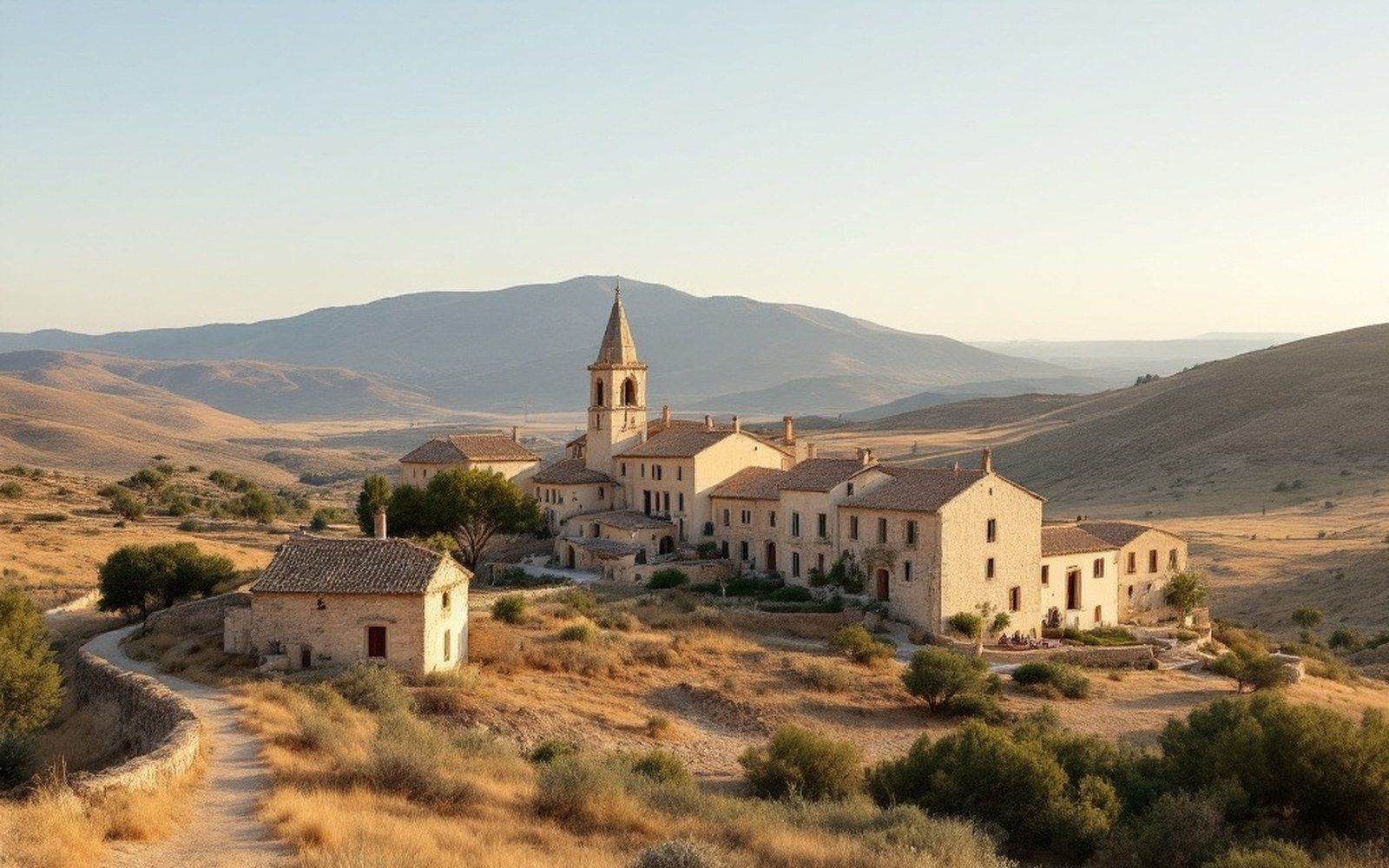
Fig. 3Church, villa and tower stand within a hundred metres of each other on the ridge.
The bishop eventually convened an ecclesiastical court, the formal tribunal that heard the case and returned findings against Saunière in 1910 and 1911. The proceedings are the documentary spine of the whole story: they record what questions were put, what answers were given or refused, and what the court concluded. No treasure, no parchments and no secret appears in those proceedings. What appears is a priest who could not or would not account for money spent on buildings, fittings and a style of life incompatible with a rural stipend.

Fig. 4Payment for saying masses was ordinary and regulated; taking stipends for far more masses than anyone could say was not.
Saunière appealed to Rome, a move that suspended the diocese's ability to enforce the suspension it had imposed. The appeal bought him time — he died in January 1917 before the matter was fully resolved — and the result was that no definitive ecclesiastical finding was ever executed against him. De Beauséjour outlived Saunière and remained bishop until 1930. His role in the affair is documented in the Annuaire pontifical catholique and in the surviving diocesan correspondence, which gives the story whatever firm documentary ground it has.