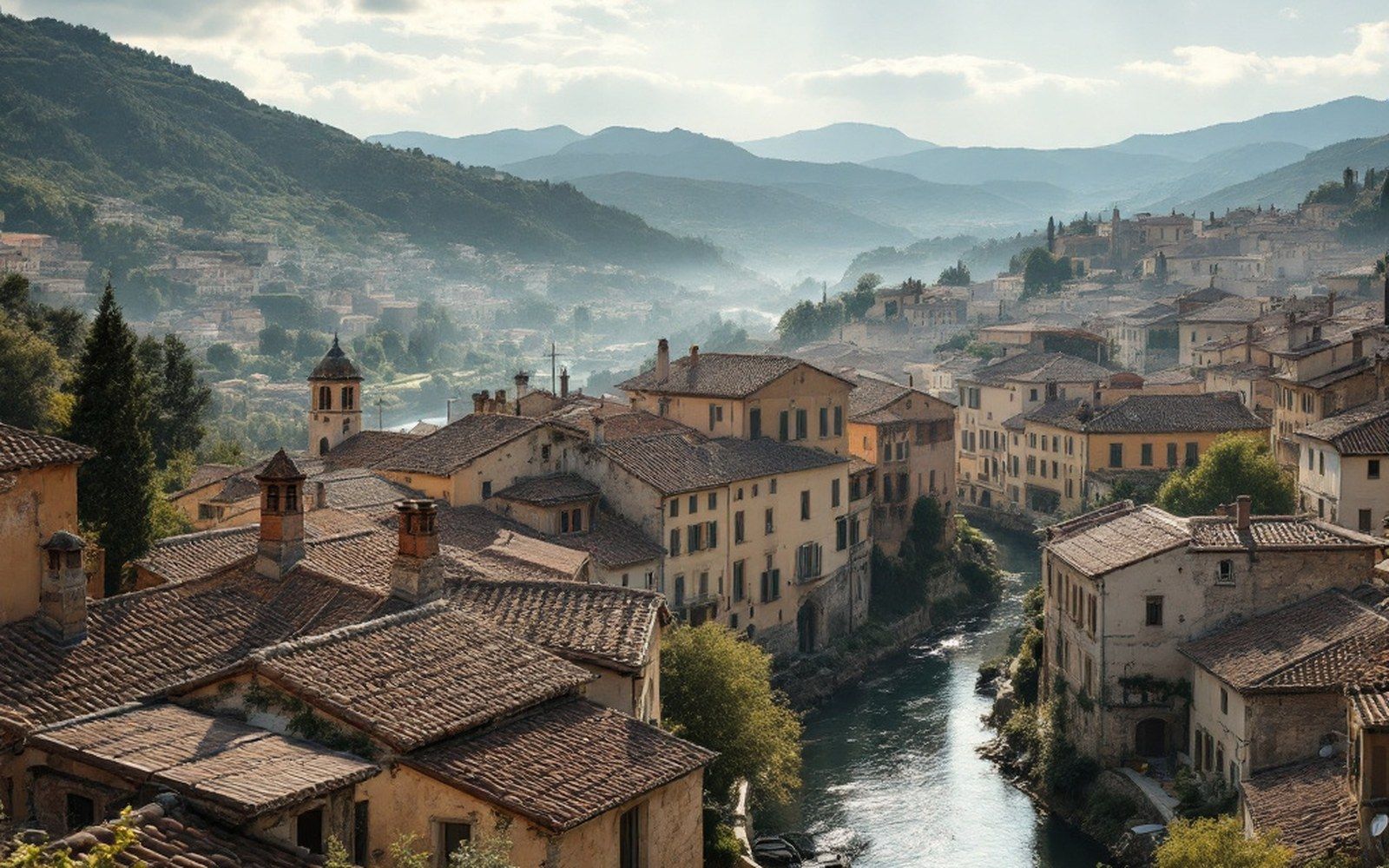
Two communes in the Sals valley
Couiza sits on the floor of the Sals valley where the Sals river meets the Aude, about four kilometres below Rennes-le-Château. It is the nearest town of any size to the ridge: a commune with a railway station on the Carcassonne–Quillan line, a bridge over the Aude, and a weekly market. In the late nineteenth century it also had a tannery and a hat-making trade, which made it, by local standards, an industrial settlement. Anyone coming to Rennes-le-Château from the direction of Carcassonne or Limoux passed through Couiza and then climbed the switchback road up to the plateau.
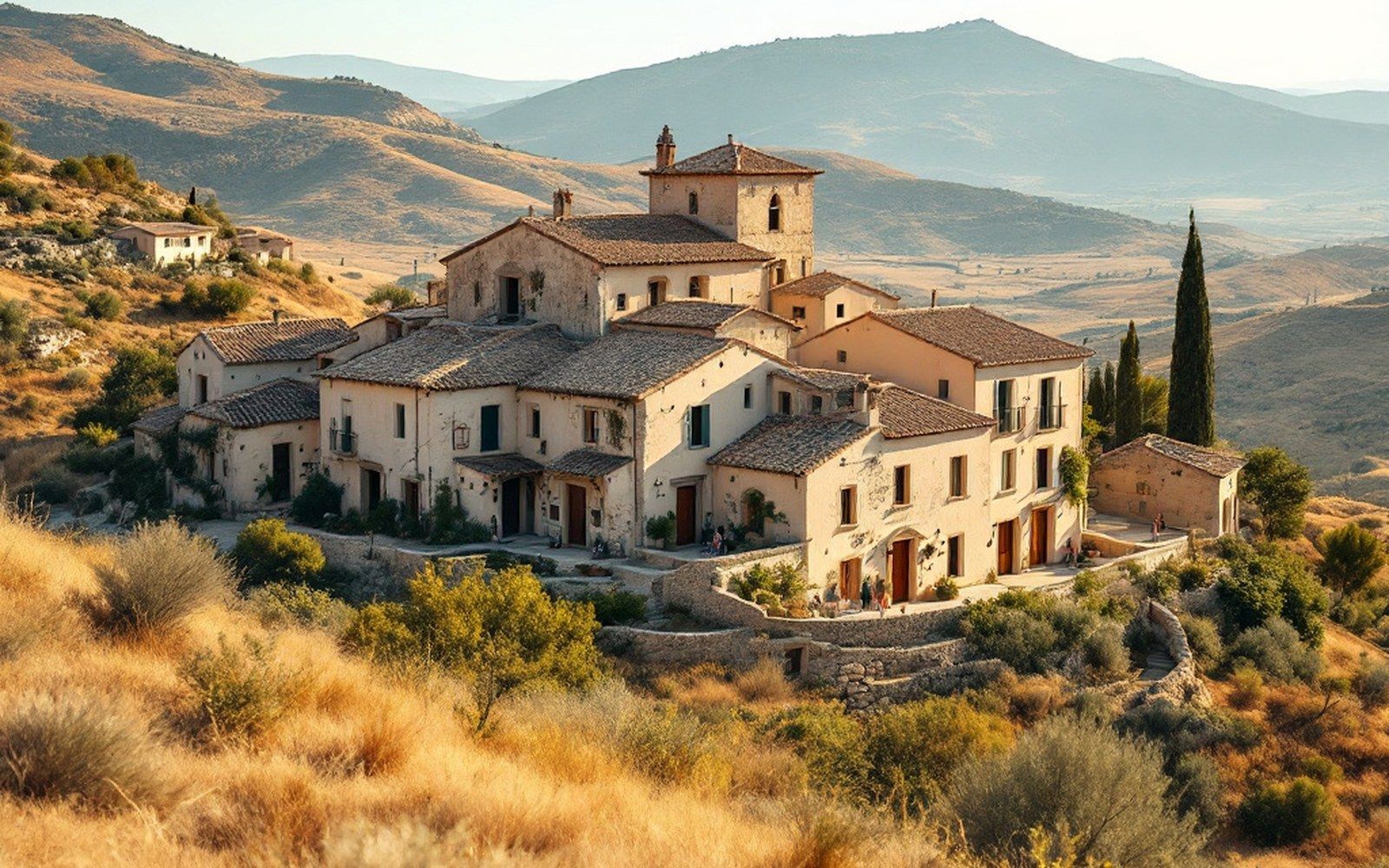
Fig. 2A very small commune on a ridge, with a population in the low hundreds and a long history before any of this.
Montazels lies a short distance from Couiza, still on the valley floor and still within the same bend of the river. It is the birthplace of Bérenger Saunière: he was born there in 1852 into a family that was rooted in this part of the Aude. The commune is recorded in the civil registers held at the Archives départementales de l'Aude, which is where the basic facts of Saunière's birth and parentage can be confirmed without resort to secondary literature.
The relationship between the ridge settlement and the valley floor was practical. Rennes-le-Château, a very small commune with no rail connection and limited agricultural land, depended on Couiza for supplies, banking, and access to the wider world. When Saunière ordered building materials for his construction works in the 1890s and early 1900s, they arrived by rail at Couiza and were carried up the hill. When Marie Dénarnaud conducted financial transactions on the property, notarial acts were drawn up at Couiza. The local notary and the local branch of whatever commercial infrastructure the Aude could provide were valley-floor institutions.
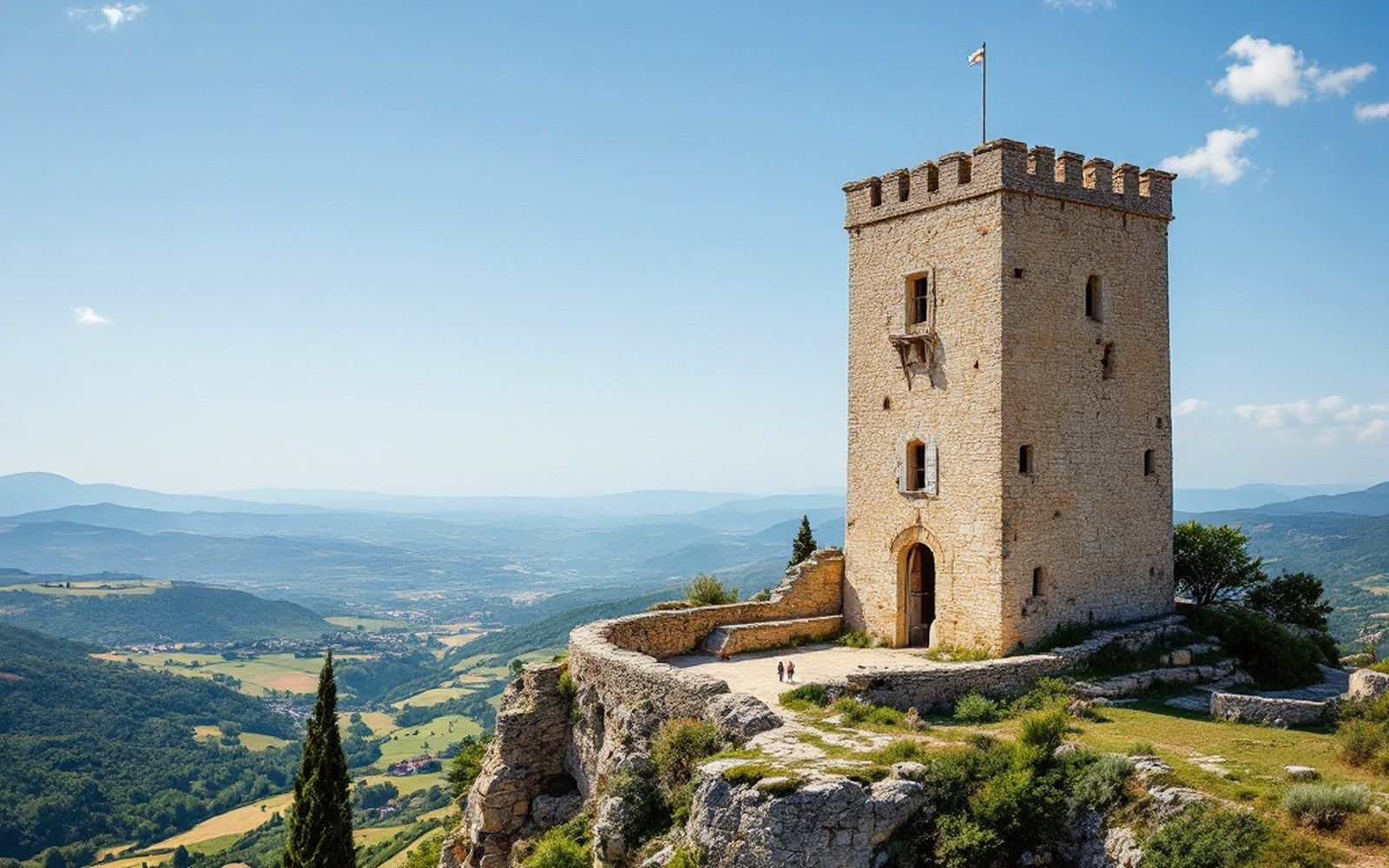
Fig. 3The tower at the edge of the drop, built as a library.
Neither commune features in the legend that was later constructed around Rennes-le-Château. They appear in the documented record because the documented record follows roads, rivers, and civil registration — the ordinary machinery of a French département — rather than ridgelines and rumour.