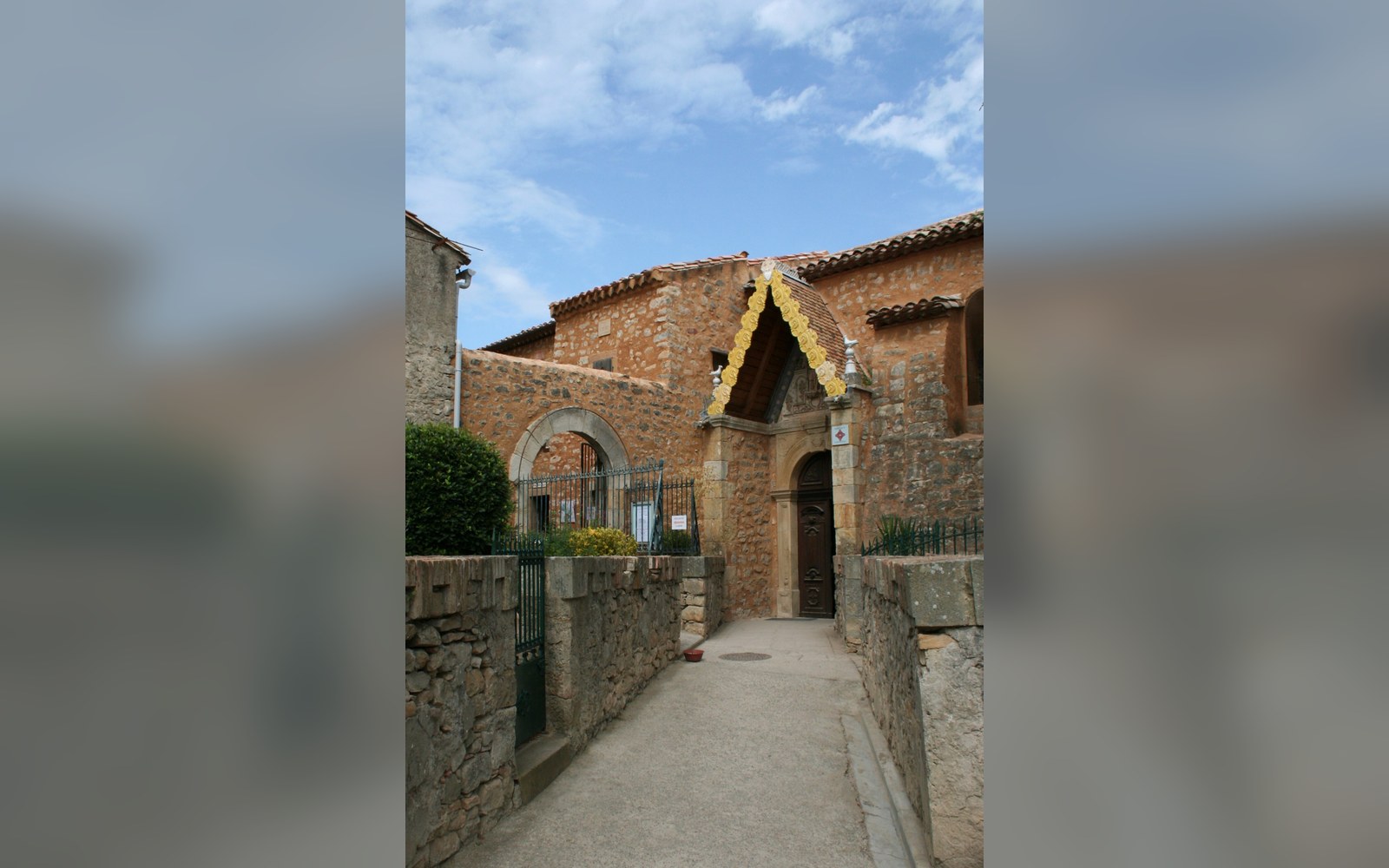
The building before Saunière
The church of Saint Mary Magdalene stands at the highest point of the ridge at Rennes-le-Château, in the Aude département of southern France. It is small, stone-built, and, in structural terms, of no particular distinction. The nave is short and relatively narrow; the apse at the eastern end is semi-circular. The date of the original construction is not precisely established in the surviving record, but the fabric is generally placed in the early medieval period, with the walls much repaired and partially rebuilt over subsequent centuries. By the time Bérenger Saunière was appointed curé — parish priest — of Rennes-le-Château in 1885, the building was in a state that contemporaries described as dilapidated.
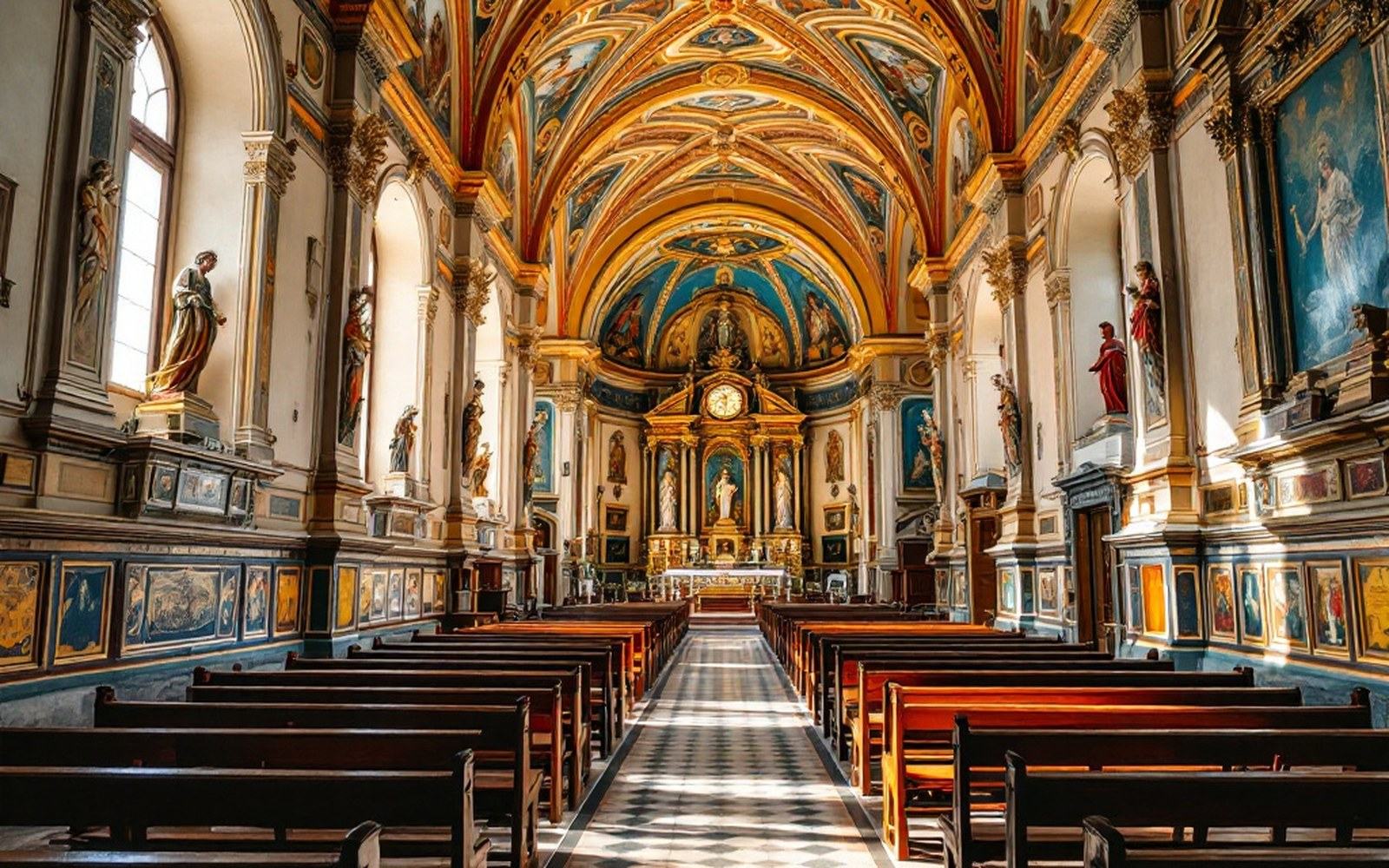
Fig. 2The scale of the work is the whole question — a rural parish church fitted out far beyond what its income could support.
What the church was not, before the 1890s, was remarkable. The commune was small and poor; the Sals valley below it was not wealthy country. Rural churches of this kind throughout the Aude received modest maintenance at best and were furnished simply. The dedication to Mary Magdalene is old — she was a common patroness in the region — but there is nothing in the pre-Saunière record to single this particular building out from dozens of comparable village churches in the diocese of Carcassonne.
The physical structure that visitors see today is predominantly the product of Saunière's refurbishment. He consolidated the walls, re-roofed the nave, and oversaw a comprehensive redecoration of the interior. That work is the reason the church is known at all; the building underneath it is an ordinary piece of rural ecclesiastical architecture.
The refurbishment and the record
Saunière began work on the church in the early 1890s. The expenditure he undertook was, relative to both his stated income and the resources of the parish, very large. Parish account books and correspondence in the diocesan archives at Carcassonne document the trajectory of the work, if not always its financing. The exterior was consolidated; the interior was stripped and rebuilt in polychrome plaster, furnished with statuary, new stations of the cross, a carved altar, and stained glass. The bill across all of this ran to sums far beyond what a rural curé's stipend — the standard ecclesiastical salary for a parish priest — could account for.
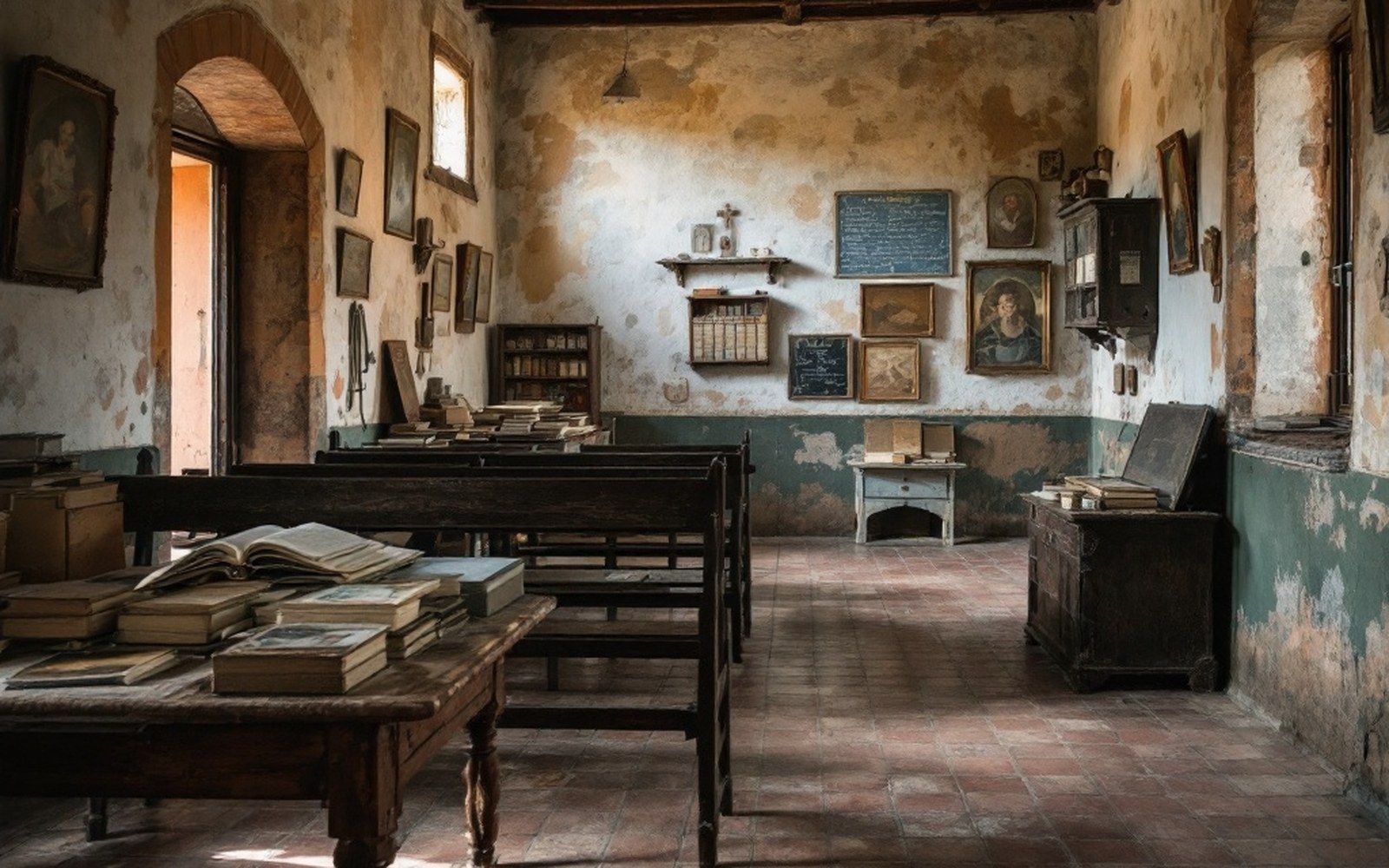
Fig. 3Painted plaster and a tiled floor: the refurbishment is the reason the church is known at all.
The decorative scheme, executed largely in painted and modelled plaster, is elaborate by any standard of rural French parish churches of the period. The figures are commercially produced — sourced from the firm of Giscard in Toulouse and similar Catholic art suppliers of the late nineteenth century — rather than bespoke works, which was common practice at the time. Their assembly into the particular interior scheme, however, reflects choices someone made about placement, inscription and visual programme. The inscriptions painted at the entrance and above the altar are in Latin and are theologically orthodox; some have attracted considerable interpretive speculation, but they are standard liturgical and devotional texts, not cryptograms. The painted plaster and the holy-water stoup at the entrance have generated more commentary than almost any other element of the church, though the documentary record surrounding them is thin.
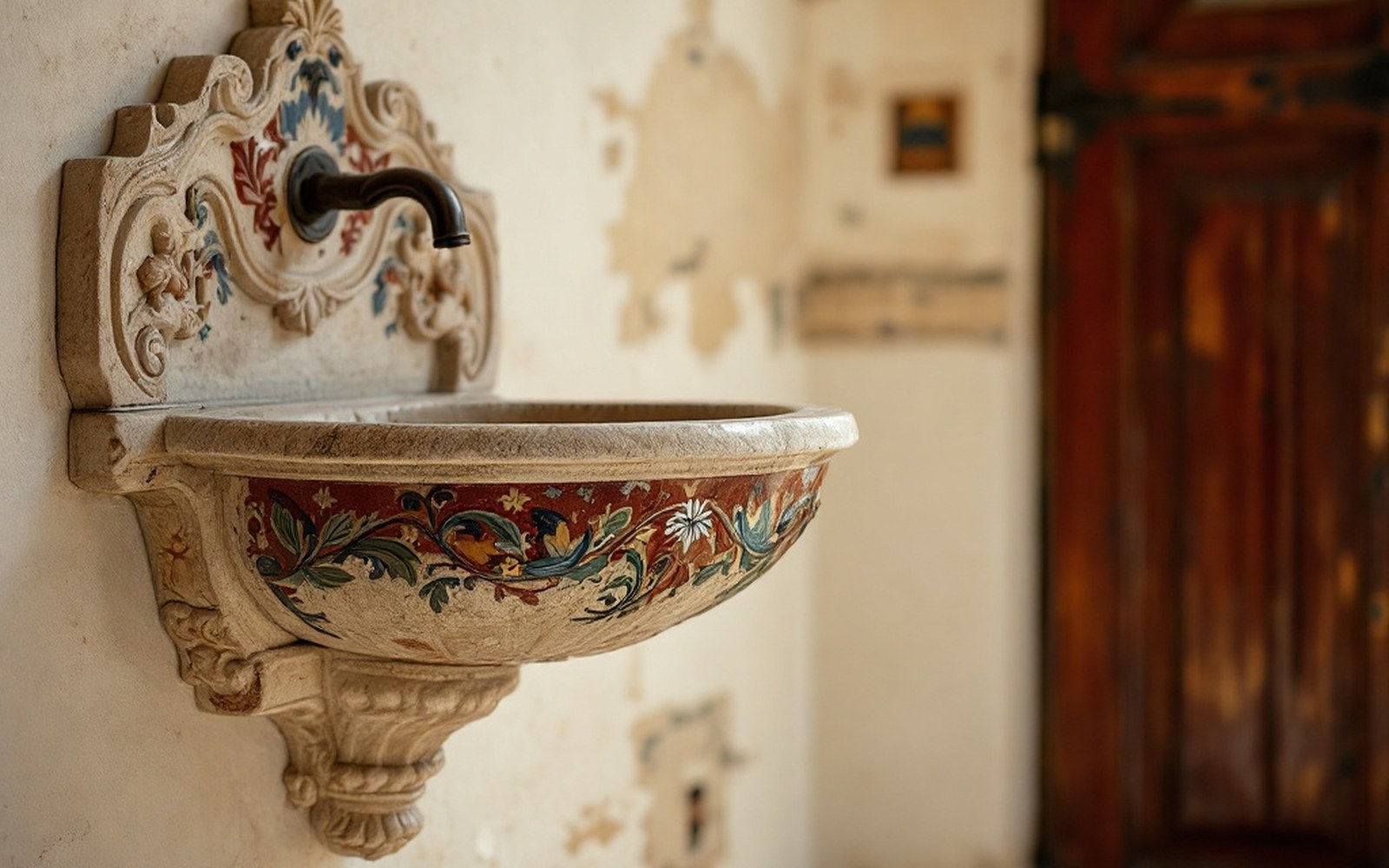
Fig. 4The much-discussed figure supporting the holy water basin inside the door, and the painted scheme around it.
The church was re-consecrated after the refurbishment in 1897. Bishop Paul-Félix Beuvain de Beauséjour of Carcassonne was the diocesan ordinary responsible for overseeing the parish, and it is his correspondence and that of his officials which forms the core of the ecclesiastical documentation. The bishop's concern was not, in the first instance, with the decoration of the church but with how the work had been paid for and, subsequently, with the practice of mass stipends — payment received for saying private masses — on a scale that appeared to far exceed what Saunière could actually have celebrated. Simony, the selling of spiritual offices, was the canonical charge that eventually brought Saunière before an ecclesiastical court.
Parish account books and correspondence in the diocesan archives at Carcassonne document the trajectory of the work, if not always its financing.
The diocesan case and the building's status
The diocesan trial that culminated in Saunière's suspension is documented in proceedings that survive in the archives. He refused to comply with the bishop's instructions to render a full account of his income and expenditure, and he appealed to Rome, which overturned the local judgment on procedural grounds. He was ultimately suspended from his priestly functions but not laicised, and he died at Rennes-le-Château in January 1917. Throughout this period the church itself remained in use; the suspension of the curé affected his personal status, not the building's.
The property arrangements around the church are part of the documented record at the Archives départementales de l'Aude. Saunière had built, on ground adjacent to the church, the Villa Bethania and the Tour Magdala, a crenellated library tower on the edge of the ridge. The land on which these stood was registered in the name of his housekeeper, Marie Dénarnaud, a notarial act — a formally witnessed legal document — that is a matter of civil record rather than inference. After Saunière's death Dénarnaud retained the property, and in 1946 she sold it to Noël Corbu, a restaurateur who proposed to open a hotel on the site.
It was Corbu who, in the mid-1950s, began telling guests a story about Saunière discovering a hidden treasure that had funded his building works. That story was taken up by the regional press and eventually by Pierre Plantard and Philippe de Chérisey, whose elaborations — a fabricated genealogy, forged documents deposited in the Bibliothèque nationale de France, the invention of a body called the Priory of Sion — gave the legend the appearance of depth and documentary support. The forgeries were identified as such and their authorship is not seriously disputed in the scholarship. The church of Saint Mary Magdalene predates all of this by centuries, and its documented history — a small rural building, refurbished expensively by a priest whose sources of income were never satisfactorily explained and who was tried by his own diocese — is, on its own terms, a sufficiently interesting story.