A library on the edge of a cliff
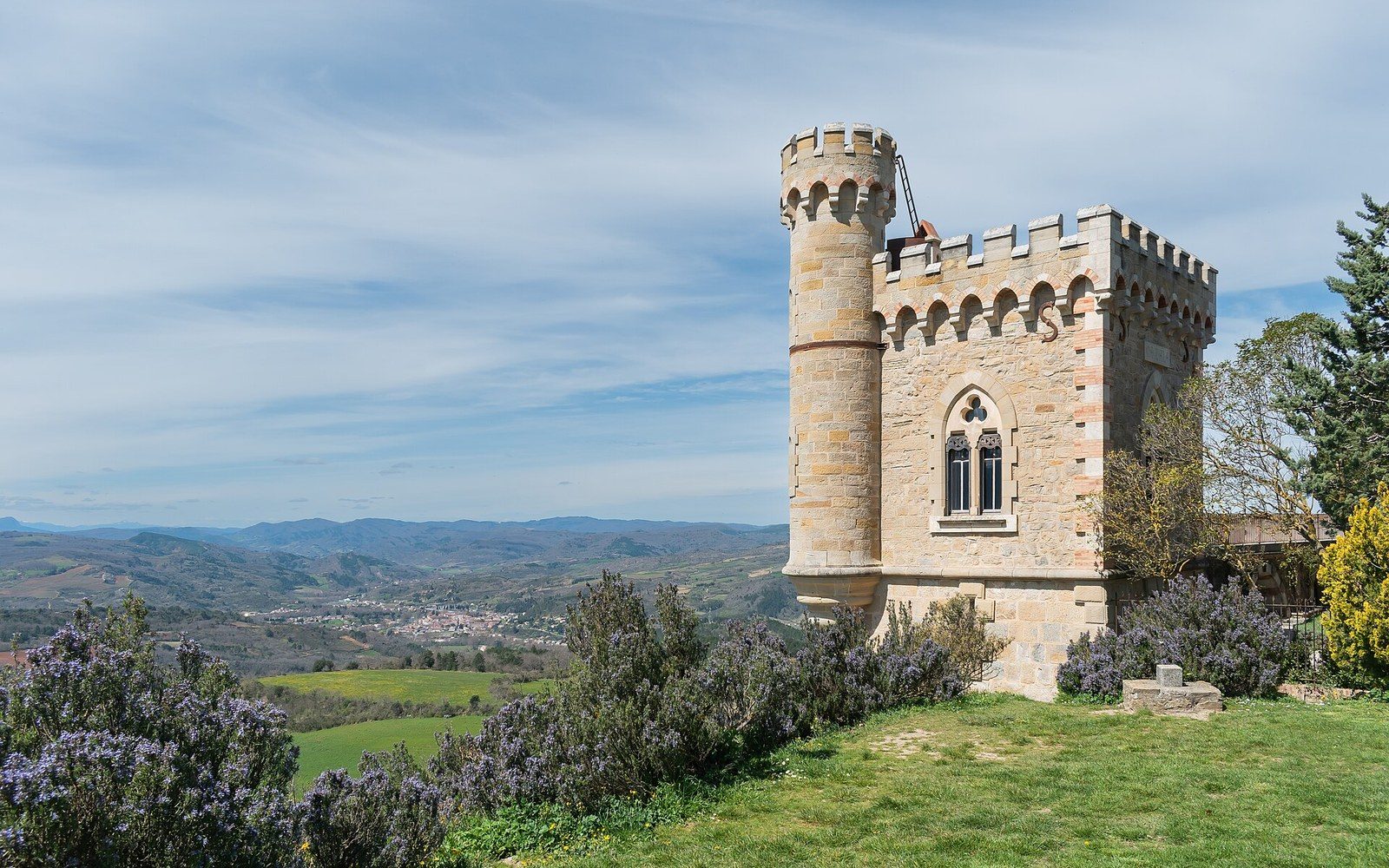
The single image that has come to represent Rennes-le-Château worldwide is not the church, not the villa, but a small crenellated tower perched at the southern tip of the ridge — Tour Magdala. It appears on postcards, book covers and documentary titles almost as a logo, which makes it all the more useful to know exactly what it is: a private library, built around 1901–1902 to house Bérenger Saunière's books and to serve as a quiet study removed from the main residence.
Saunière had already built Villa Bethania on the plot immediately north of the church. The tower rose at the opposite end of the garden he laid out along the ridge's southern edge, connected to the villa and the church enclosure by a raised promenade walk. The walk — sometimes called the belvedere, the French term for an elevated terrace designed to command a view — runs along the lip of the escarpment, with the Sals valley falling away below it. The tower anchors its western end. Together the walk and the tower were conceived as a single architectural gesture, a private domain shaped as much by the view as by any practical need.
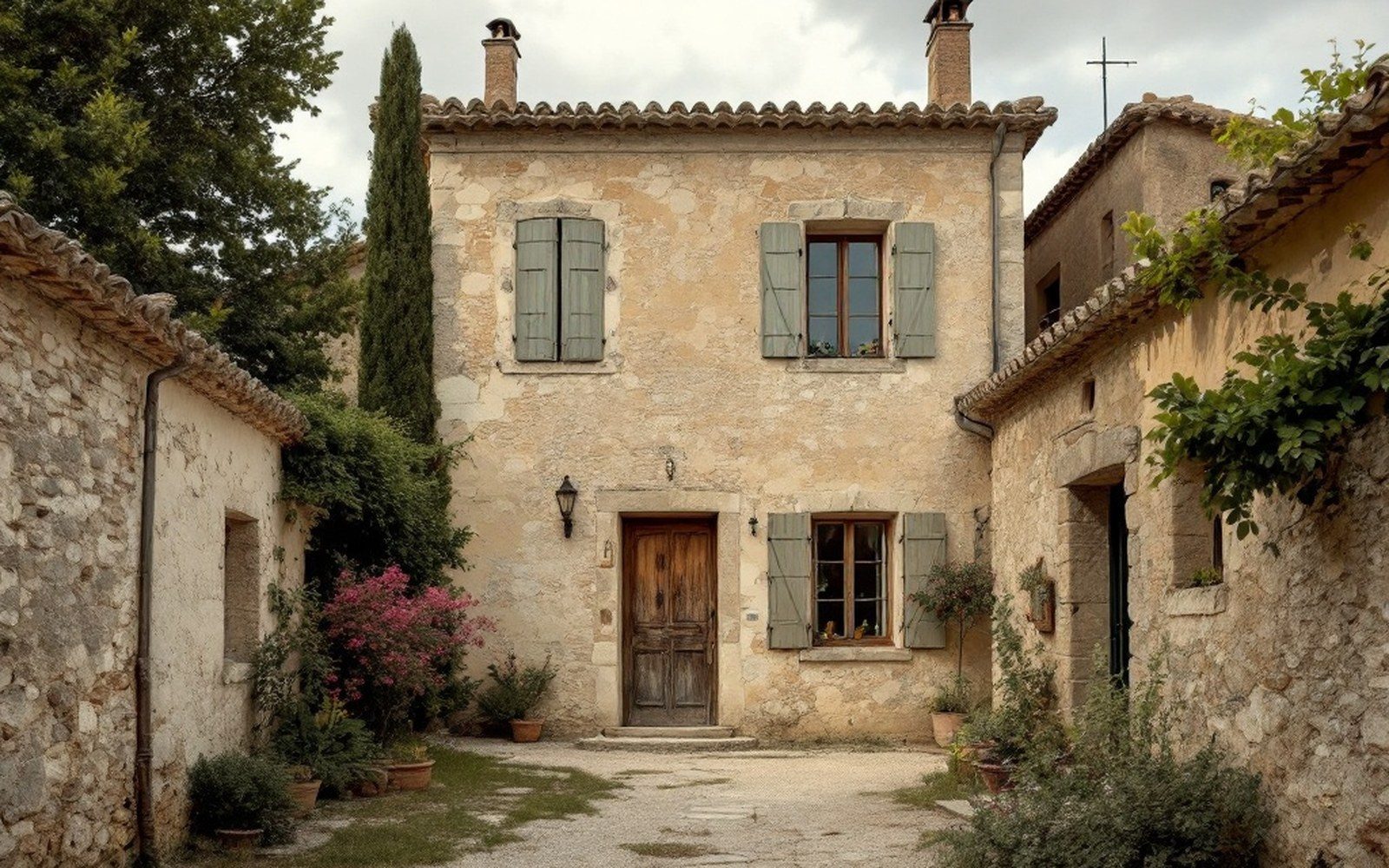
Fig. 2A substantial house built beside the church, in a village of small ones.
What the building actually is
Tour Magdala is a round tower of roughly two storeys, built from local stone and finished with battlements — crenellations that give it the silhouette of a small medieval keep while dating it firmly to the taste for the neo-Gothic that was widespread in provincial France at the turn of the twentieth century. The ground floor served as the library proper: shelving around the curved interior walls, a space large enough to hold a working collection without being a grand room by any measure. The upper level is a small open platform, accessible from inside, from which the view across the valley and toward the Pyrenean foothills is extensive.
The name Saunière gave it — Magdala — connects it to Mary Magdalene, the dedicatee of the parish church of Saint Mary Magdalene he had spent the previous decade refurbishing. Whether the name carried any significance beyond that dedication is not documented; Saunière used the Magdalene reference consistently across his building works as a personal and devotional signature.
The tower is modest in scale. Visitors to the site expecting something imposing tend to find a compact structure, perhaps ten or eleven metres to the top of the crenellations, whose visual drama comes almost entirely from its position on the cliff edge rather than from its dimensions. The ridge and Sals valley do the dramatic work; the building itself is contained.
Construction and cost
The documentary record for Tour Magdala's construction is thinner than for the church refurbishment, where the diocesan trial proceedings generated a paper trail. The tower appears in the sequence of building works that Saunière carried out after the church was complete, funded — as the Diocese of Carcassonne eventually determined — through a system of mass stipend trafficking on an industrial scale. The diocesan court established that Saunière was receiving payments for far more masses than he could physically say, solicited through advertisement and correspondence with other priests across France and abroad.

Fig. 3Accounts of the kind Saunière was asked to produce, and the kind the diocese would not accept.
The precise cost of the tower is not a figure that the surviving documents yield with confidence. What the record does show is the sequence: church refurbishment through the 1890s, Villa Bethania begun around 1900, the garden and tower projects following shortly after. Saunière was still building — or had plans to build — when his income was cut off by the bishop. Bishop Paul-Félix Beuvain de Beauséjour suspended Saunière in 1911 after he refused to give a satisfactory account of his finances to the diocesan investigation. Building on a larger second tower, sometimes mentioned in descriptions of the unfinished state of the site, had apparently not progressed by that point.
The land on which the tower and the garden stand was held not in Saunière's name but in that of his housekeeper, Marie Dénarnaud — a fact that the Archives départementales de l'Aude records make plain through the notarial acts governing the property. A notarial act is a formal legal document drawn up by a notary and carrying full legal force; the use of Dénarnaud's name was deliberate and consequential, keeping the assets outside Saunière's own legal estate.
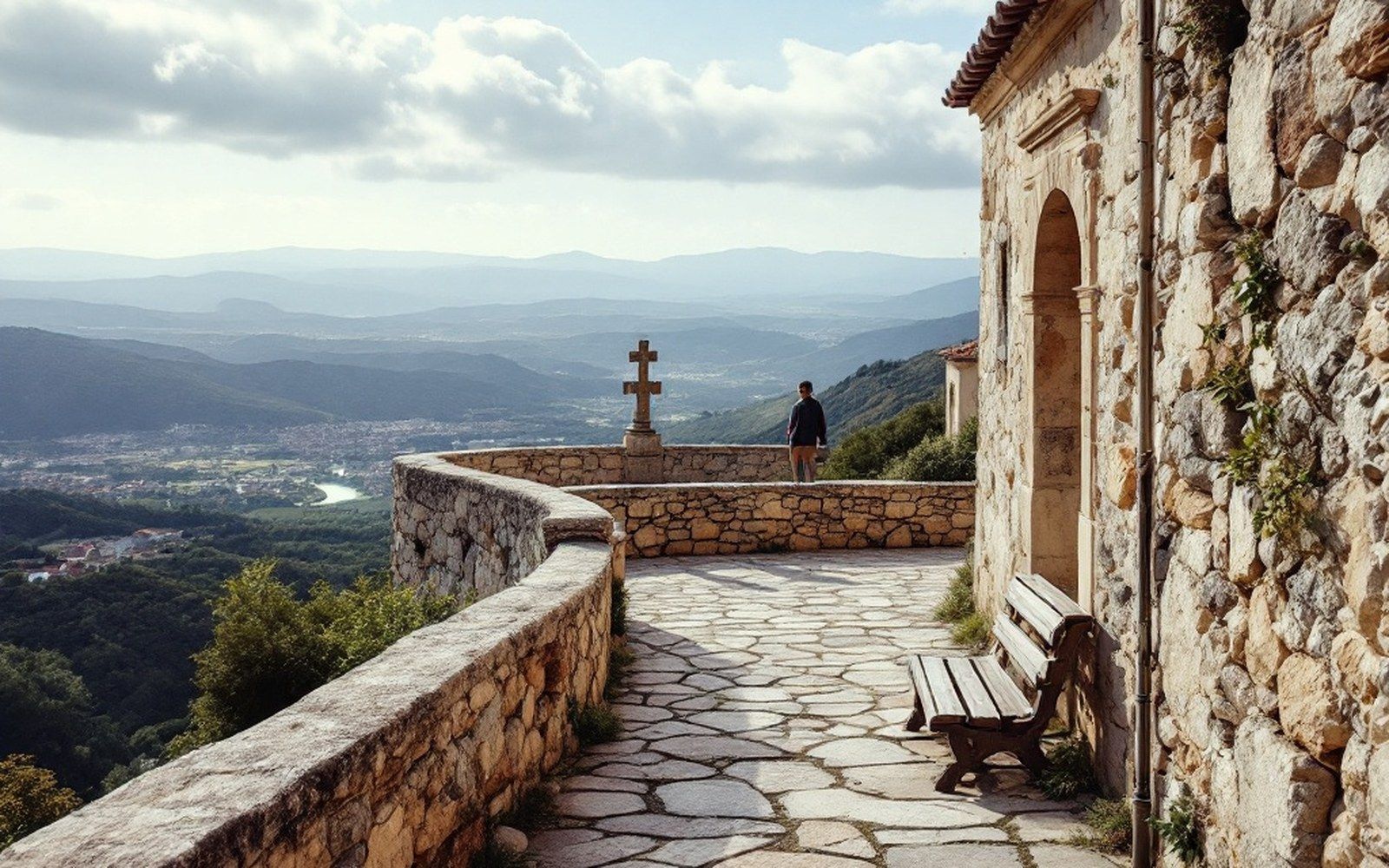
Fig. 4A formal garden, a belvedere walk and a calvary, laid out on ground that drops away.
After Saunière
Saunière died in January 1917. Dénarnaud lived on at the property until her own death in 1953, though in 1946 she had sold the estate to Noël Corbu, a businessman who converted Villa Bethania into a hotel-restaurant, with the tower and garden as features of the grounds. It was Corbu who, beginning in the mid-1950s, started telling customers a story about a priest who had found a treasure — a story that had no basis in the documented record but which proved exceptionally effective at attracting guests and press attention.
The regional press of the Aude published early versions of Corbu's account, and from that point the legend's spread was essentially unstoppable. Tour Magdala became part of the myth's imagery precisely because it photographs so well: the crenellated silhouette against the sky, the valley below, the suggestion of height and isolation. The building's actual function — a book room built by a country priest with money he could not account for — was steadily replaced in popular culture by associations that the structure itself does not support.
Pierre Plantard and Philippe de Chérisey later elaborated the wider legend into a genealogical and political narrative sustained by documents they fabricated and deposited at the Bibliothèque nationale de France. De Chérisey subsequently admitted composing the supposedly ancient coded parchments that formed a centrepiece of the claims. The tower figures in that literature only as atmosphere; it was never claimed to contain or conceal anything specific.
What the Archives départementales de l'Aude hold is more useful: civil and notarial records that trace the actual ownership history of the property across successive owners — Dénarnaud, Corbu and those after him — in documents that can be read and checked. The tower has a history rooted in those papers: an eccentric rural building project, financed through ecclesiastical fraud, photographed into an icon by a story someone else invented.